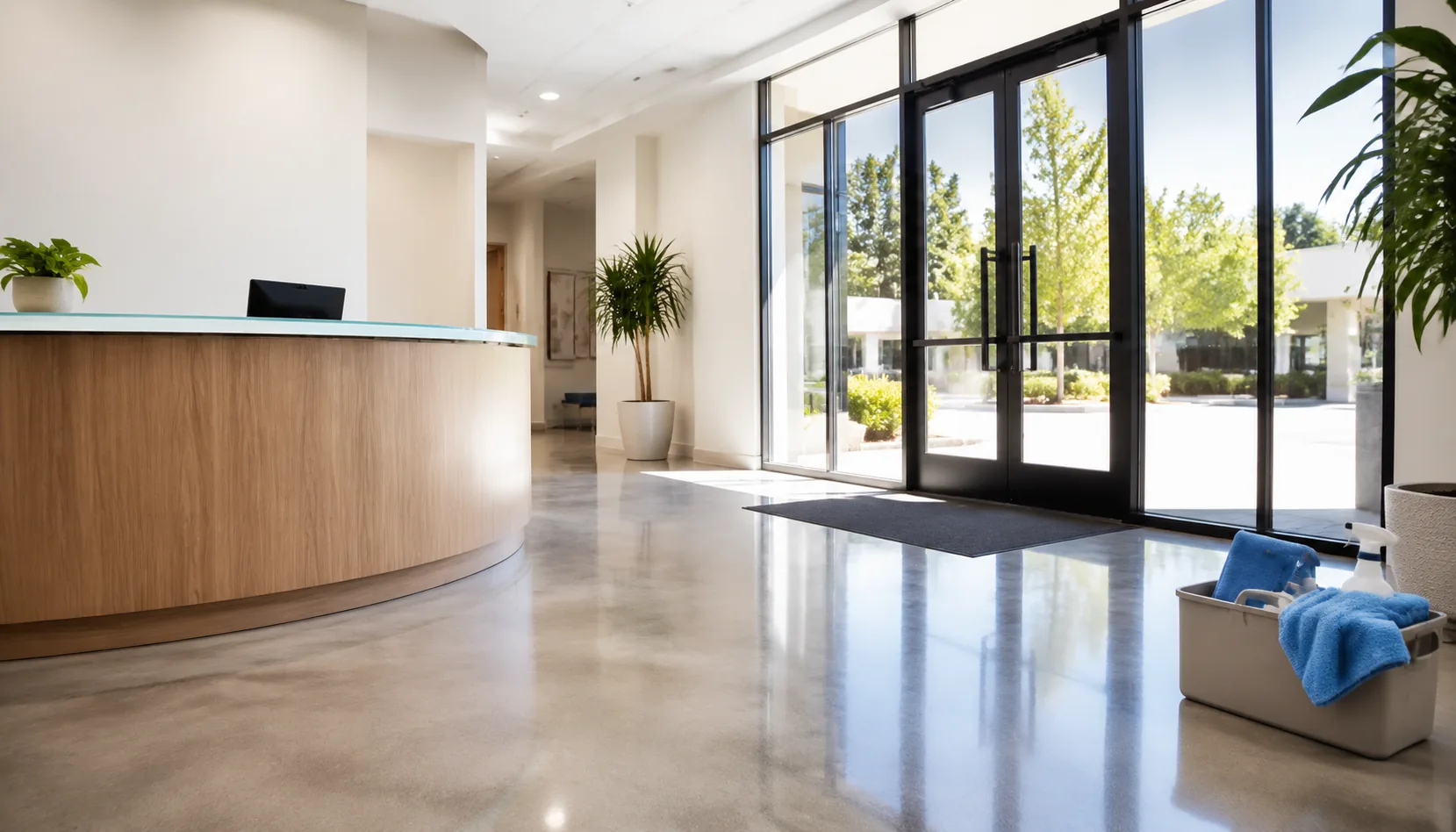
A practical commercial cleaning checklist keeps shared spaces easier to use, easier to maintain, and more consistent from week to week. The best checklist does not try to disinfect everything every day or turn cleaning into a complicated system. It simply puts the right tasks in the right order: remove debris, clean visible soil, reset high-use areas, handle restrooms and break areas carefully, and schedule deeper work before buildup becomes obvious.
This guide is written for everyday workplace environments such as offices, reception areas, shared kitchens, restrooms, conference rooms, and light commercial spaces. It also explains when cleaning, sanitizing, and disinfecting are different tasks, because product misuse can create safety problems. For local help with recurring service or a deeper reset, SRS Cleaning Services provides Office Cleaning, cleaning services, and quote support for Orange County workplaces.
What a commercial cleaning checklist should cover
A useful checklist starts with zones, not random tasks. Most workplaces have an entrance or lobby, work areas, meeting rooms, restrooms, a break room or kitchenette, floors, trash areas, and supply storage. Each zone should have a basic reset standard and a frequency. For example, the lobby may need daily floor attention and glass touch-up, while high shelves or vents may only need periodic dusting.
The checklist should also separate visible presentation from health-related cleaning. Presentation tasks include trash removal, dusting, glass, floors, and clutter control. Health-related tasks include cleaning high-touch surfaces, handling restroom fixtures, and using sanitizers or disinfectants only where they are appropriate and label directions can be followed.
Cleaning, sanitizing, and disinfecting
Cleaning removes most dirt, germs, and impurities from surfaces with soap, water, and scrubbing, according to the CDC (CDC cleaning and disinfecting guidance). Sanitizing reduces germs to levels considered safe by public-health codes or regulations, and disinfecting uses chemicals to kill many remaining germs on surfaces; the CDC notes that surfaces should be cleaned before sanitizing or disinfecting (CDC definitions of cleaning, sanitizing, and disinfecting).
That distinction matters in commercial spaces because disinfecting dirty surfaces is not a shortcut for cleaning. If a surface has dust, food residue, restroom soil, or visible grime, clean first. Then use a sanitizer or disinfectant only when the surface, product label, ventilation, and required wet contact time make sense. The CDC’s facility guidance also recommends regular cleaning of high-touch surfaces and using products appropriate for the surface being cleaned (CDC facility cleaning guidance).
Daily commercial cleaning tasks
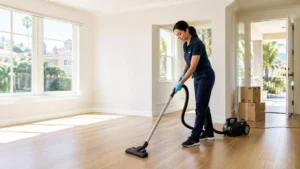
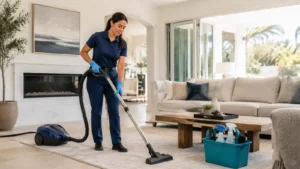
Daily cleaning should keep the workplace presentable and prevent easy-to-control buildup. Start at the entrance. Remove trash, straighten visible areas, spot-clean glass doors, wipe reception counters, clean door handles, and vacuum or mop high-traffic flooring. Continue into shared work areas by removing debris, wiping accessible horizontal surfaces, emptying trash and recycling, and cleaning touch points such as switches, handles, railings, shared phones, and conference-room tables.
- Empty trash and replace liners where needed.
- Clean entry glass, door handles, counters, and waiting-area surfaces.
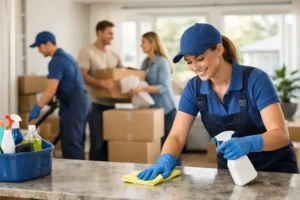
- Wipe shared tables, conference surfaces, and exposed high-touch points.
- Vacuum carpet traffic lanes and mop hard floors with a surface-appropriate method.
- Reset chairs, visible clutter, and shared supply areas.
- Check odors, spills, overflowing bins, and restroom supply levels.
For more workplace-specific planning, compare this broader checklist with the SRS office cleaning checklist and the guide to janitorial service vs. office cleaning. Shared residential-building spaces have their own traffic patterns, so the apartment common area cleaning checklist adds focused tasks for lobbies, hallways, elevators, laundry rooms, and waste areas.
Copy-this daily reset
- Walk the entry and remove anything that does not belong.
- Empty trash before wiping surfaces so debris does not spread.
- Clean high-touch points before floors.
- Check restrooms and break areas for supplies, odors, spills, and visible residue.
- Finish with floors, then inspect from the entrance as if arriving for the first time.
Restroom and break area checklist
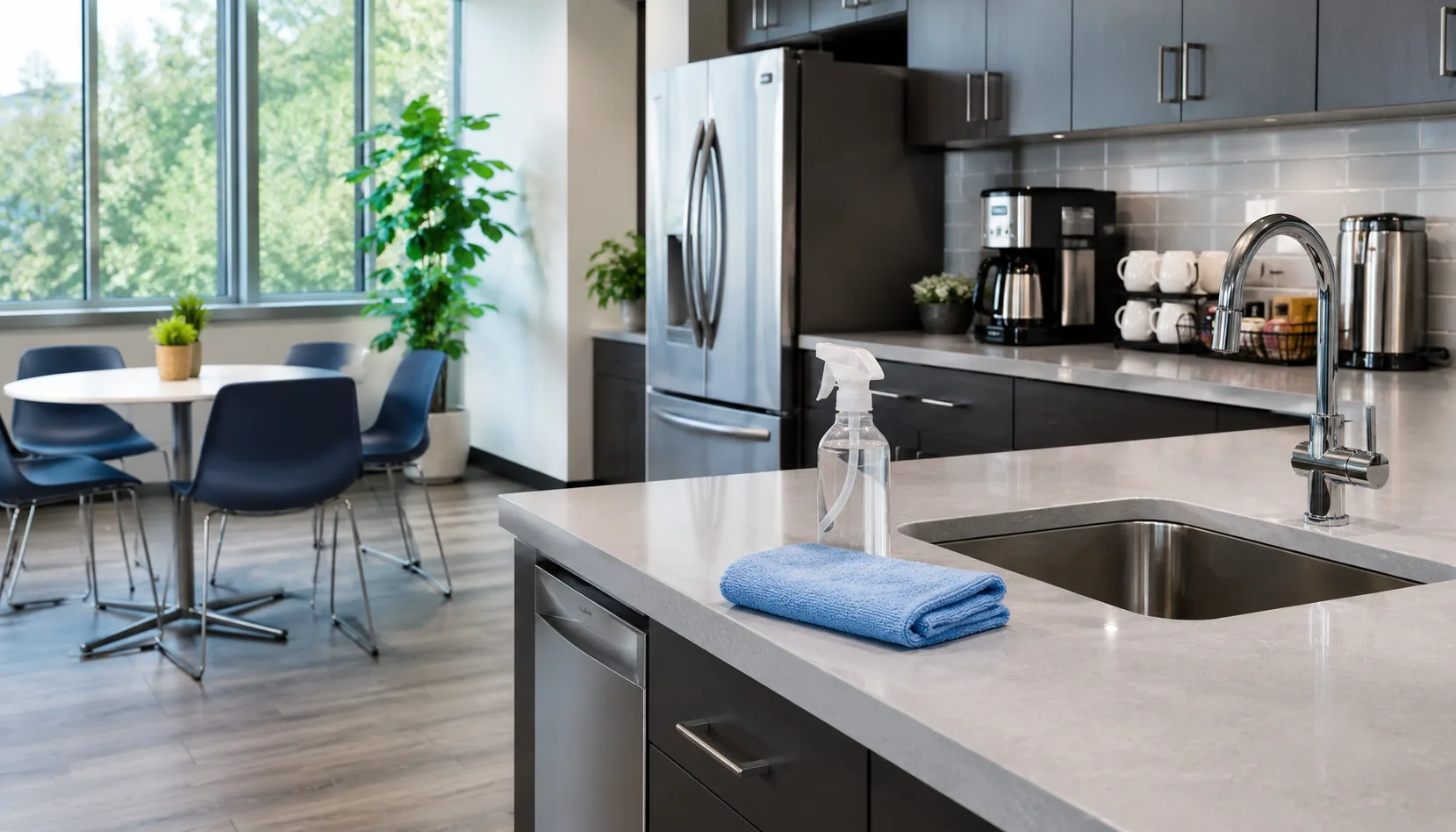
Restrooms and break areas need more detail because moisture, food, trash, and frequent hand contact can create odors and visible residue quickly. In restrooms, clean sinks, faucets, counters, toilets, partitions, mirrors, dispensers, door handles, light switches, and floors. Refill soap, paper products, and liners. In break rooms, clean counters, sink areas, table surfaces, chair backs, appliance handles, cabinet pulls, and trash areas.
Use separate tools for restroom and food-area cleaning to avoid cross-contamination. Keep cloths, brushes, and mop heads organized by zone or color when possible. If sanitizing or disinfecting is part of the task, follow the product label rather than guessing the contact time. Labels matter because a product may need the surface to remain wet for a specific period before it can do what the label claims.
Weekly and monthly deep cleaning
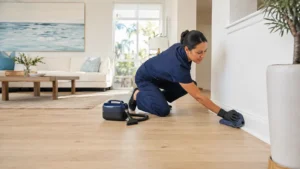
Weekly tasks prevent the slow buildup that daily cleaning can miss. Dust vents, baseboards, window ledges, door frames, chair bases, cabinet faces, and lower wall edges. Detail conference rooms, clean interior glass, vacuum edges, mop behind movable items, and inspect corners where debris collects. Monthly tasks may include high dusting, machine floor care, detailed wall-spot cleaning, upholstery vacuuming, and deeper restroom detail.
The exact schedule depends on traffic, flooring, weather, food use, restroom volume, and how visible the space is to visitors. A small low-traffic office may need lighter weekly detail than a busy medical, retail, or customer-facing environment. The useful standard is simple: if a task is repeatedly noticeable by the time it is cleaned, move it to a more frequent schedule.
Safe product use and supplies
Workplace cleaning products should be selected and stored with safety in mind. OSHA explains that employers with hazardous chemicals in the workplace must have labels, safety data sheets, and training for exposed workers (OSHA Hazard Communication overview). OSHA’s Safety Data Sheet guidance explains that SDS documents include chemical properties, hazards, protective measures, and safe handling information (OSHA Safety Data Sheet brief).
Never mix cleaning chemicals. The CDC warns that mixing bleach or disinfectants with other cleaners can release dangerous vapors (CDC bleach safety guidance). For lower-hazard product selection, the EPA Safer Choice product search helps identify products that meet the Safer Choice Standard (EPA Safer Choice product search). Safer Choice does not remove the need to follow labels, but it is a useful filter when comparing cleaning-product options.
How to build a cleaning frequency plan
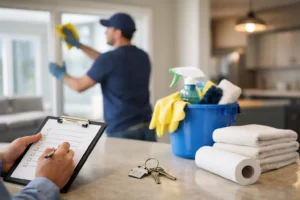
Build the plan around use, not guesswork. List every zone, note what gets touched most, decide what must be clean before each workday, and separate daily, weekly, and monthly tasks. Then review the checklist after two weeks. If restrooms run out of supplies, floors look dull midweek, or kitchen trash creates odors, the frequency is too light. If areas look consistently clean with no rushed catch-up work, the schedule is closer to right.
| Area | Typical daily focus | Typical periodic focus |
|---|---|---|
| Entry and lobby | Trash, glass, handles, floors | Baseboards, vents, detailed edges |
| Work areas | Trash, touch points, visible surfaces | Chairs, ledges, detailed dusting |
| Restrooms | Fixtures, mirrors, supplies, floors | Partitions, tile edges, odor sources |
| Break room | Counters, sink, tables, trash | Cabinet faces, appliance exteriors, corners |
When professional commercial cleaning helps
Professional cleaning helps when the checklist needs to be reliable, documented, and consistent. It is also useful when restrooms, floors, kitchens, glass, and shared areas need regular attention without interrupting the workday. SRS Cleaning Services supports Orange County workplaces with commercial and office cleaning service that can be adjusted around the space, traffic level, and cleaning priorities.
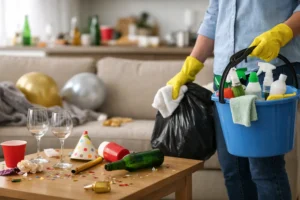
If the space needs a one-time reset before starting a recurring schedule, ask for the scope to include detailed dusting, restrooms, break areas, high-touch points, floors, and visible buildup. If ongoing service is the goal, start with the zones that affect daily comfort most and adjust after the first few visits. You can also review the SRS Office Cleaning page, the office cleaning quote page, and the main Orange County service area page.
Commercial cleaning checklist FAQ
How often should a commercial space be cleaned?
High-use areas usually need daily attention, while detailed dusting, edge cleaning, vents, and other deeper tasks may be weekly or monthly depending on traffic. The right frequency is the one that prevents visible buildup before it becomes distracting.
Is commercial cleaning the same as disinfecting?
No. Cleaning removes dirt, germs, and impurities. Disinfecting uses chemicals to kill many remaining germs after cleaning. Disinfecting can be useful in selected areas, but it should follow the product label and should not replace basic cleaning.
What should be cleaned first?
Start by removing trash and obvious debris, then dust or wipe upper surfaces, clean high-touch points, handle restrooms and break areas, and finish with floors. Cleaning floors last prevents extra dust or debris from landing on newly finished surfaces.
What tags or categories fit this kind of checklist?
For the SRS blog, this topic belongs under Commercial Cleaning because it focuses on workplace cleaning systems. Useful supporting tags include Office Cleaning, Janitorial Service, Cleaning Checklist, and Orange County.
A strong commercial cleaning checklist makes the work easier to repeat and easier to inspect. Keep the plan simple, clean before sanitizing or disinfecting, follow product labels, schedule deeper detail before buildup becomes obvious, and adjust the frequency based on how the space is actually used. To plan a commercial cleaning routine in Orange County, review SRS Office Cleaning or start with the office cleaning quote page.